
Inflation eases to 2.8% as gas prices cool ⛽📉
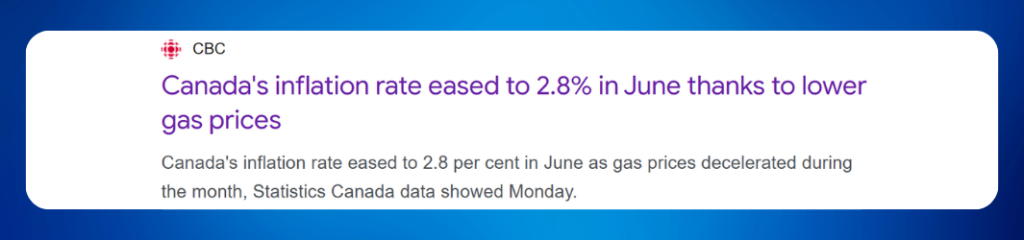
Canada’s annual inflation rate slowed to 2.8% in June, down from 3.2% in May, according to Statistics Canada. The biggest reason? Lower gasoline prices helped bring overall inflation back down after a temporary spike the month before.
⛽ Gas prices were the biggest reason inflation slowed
After rising sharply in May due to tensions in the Middle East, gas prices dropped in June as geopolitical tensions eased and oil prices fell.
📉 Gas prices declined 10.2% month-over-month, helping reduce the overall inflation rate.
However, fuel prices have started climbing again in recent weeks as global uncertainty has returned, so this relief may not last if oil prices continue to rise.
🛒 Grocery prices are still rising but at a slower pace
Food prices continued to increase, although the pace slowed slightly.
Here’s what changed:
🍇 Fresh fruit prices increased more slowly, with grapes seeing some relief.
🍗 Some everyday staples became more expensive:
- Chicken: +5.7%
- Bread, rolls, and buns: +6.0%
Overall grocery inflation eased to 3.9%, down from 4.3% in May.
✈️ Travel became much more expensive
Canadians planning summer trips likely noticed higher travel costs.
📍 In Ontario and British Columbia, particularly Toronto and Vancouver, hotel prices jumped roughly 20% year over year, driven by increased demand surrounding the FIFA World Cup.
✈️ Airfare also increased 9.6% compared to last year as jet fuel costs rose and more Canadians travelled within the country.
📊 Core inflation remained encouraging
While headline inflation sits above the Bank of Canada’s 2% target, the underlying measures of inflation (often called core inflation) came in lower than economists expected.
This suggests that many of the recent price increases are being driven by temporary factors, such as energy prices, rather than widespread inflation across the economy.
🏦 What does this mean for mortgages?
For homeowners and homebuyers, this report is generally encouraging.
✅ Inflation moved lower.
✅ Core inflation remained relatively stable.
✅ The Bank of Canada recently kept its overnight interest rate at 2.25%.
Because underlying inflation continues to show signs of easing, many economists believe the Bank of Canada is likely to keep interest rates unchanged for the remainder of the year unless inflation unexpectedly accelerates again.
For variable-rate mortgage holders, that’s a positive sign, as stable interest rates mean borrowing costs are less likely to increase in the near term.
Fixed mortgage rates, however, are influenced more by bond yields than by the Bank of Canada’s overnight rate, so they may continue to fluctuate depending on inflation expectations and global economic events.
