
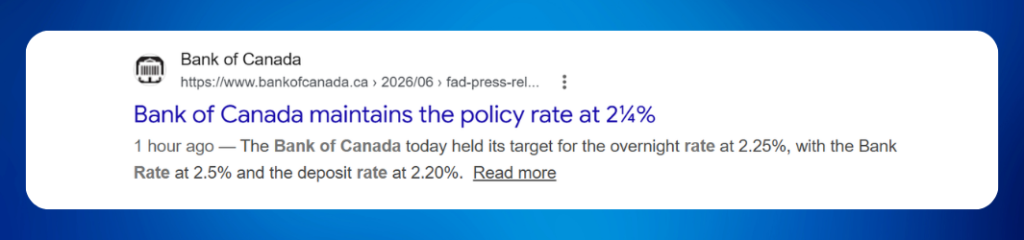
On June 10, 2026, the Bank of Canada announced that it is keeping its key interest rate unchanged at 2.25%.
The decision reflects a mix of economic uncertainty, rising global tensions, and inflation concerns that continue to affect both Canada and the global economy.
🌍 Global Events Are Creating Economic Uncertainty
The ongoing conflict in the Middle East has now entered its fourth month, causing:
- Higher oil and energy prices
- Supply chain disruptions
- Slower global economic growth
- Increased inflation pressures
At the same time, uncertainty surrounding potential new U.S. tariffs and trade policies continues to create challenges for businesses and investors worldwide.
What’s Happening Around the World?
🇺🇸 United States
The U.S. economy remains relatively strong, supported by:
- Consumer spending
- Investment in artificial intelligence and technology
🇪🇺 Europe
Economic growth remains weak as rising energy costs continue to weigh on businesses and consumers.
🇨🇳 China
China’s economy is being supported by strong export activity, helping maintain growth despite global challenges.
🇨🇦 How Is Canada’s Economy Performing?
Canada’s economy showed signs of weakness during the first quarter of 2026.
Key Economic Highlights:
- 📉 GDP declined by 0.1%
- 📈 Consumer spending increased by 1.4%
- 🏠 Housing activity slowed
- 🏢 Business investment remained weak
- 📦 Imports increased while exports declined
Although Canada added jobs in May, overall employment growth has been relatively flat since the beginning of the year.
Labour Market Snapshot
- Unemployment rate: 6.6%
- Unemployment has generally remained between 6.5% and 7% in recent months
The Bank expects economic growth to improve somewhat during the second quarter, but believes there is still excess capacity in the economy.
📊 What About Inflation?
Inflation moved higher in April, reaching 2.8%.
Several factors contributed to the increase:
⛽ Higher oil and gasoline prices
🧾 The removal of the federal consumer carbon tax from annual inflation calculations
The good news is that broader inflation pressures remain relatively contained.
Inflation Trends
- ✅ Core inflation measures have eased closer to 2%
- ✅ Shelter inflation continues to slow
- ✅ Food inflation has moderated, although grocery prices remain elevated
The Bank expects overall inflation to stay near 3% in the short term before gradually moving back toward its 2% target.
💭 Why Did the Bank Hold Rates?
The Bank of Canada decided not to change interest rates because:
- Canada’s economy remains soft
- Trade uncertainty continues
- Global conflicts are keeping oil prices elevated
- Inflation risks still need to be monitored
While higher energy prices are pushing inflation higher in the short term, the Bank believes it can prevent those pressures from becoming a long-term problem.
🔑 What This Means for Canadians
For now, borrowing costs remain unchanged.
The Bank of Canada is taking a cautious approach, balancing slower economic growth against inflation risks. Future rate decisions will depend on how inflation, employment, economic growth, and global events evolve over the coming months.
Bottom line: The Bank of Canada is staying on the sidelines for now, keeping rates at 2.25% while closely monitoring inflation and global economic uncertainty.
