
The Canadian mortgage landscape is shifting again as bond yields fall and global uncertainty rises. While the Bank of Canada continues to hold its key rate, signs from the U.S. economy and trade tensions are adding pressure on the path forward. Could this signal a change for fixed mortgage rates? Let’s break down the latest updates and what they mean for borrowers.
🌍📉 Global Worries Are Shaping Canadian Rates
Late last week, financial markets became uneasy as new signs pointed to a slowing U.S. economy. This caused Canadian 5-year bond yields to drop, and brought fresh speculation about when the BoC might start cutting rates again.
🔹 Weak U.S. job numbers
🔹 Ongoing global trade tensions (especially involving Donald Trump)
These factors raised the likelihood that the U.S. Federal Reserve could cut rates soon, which would also impact Canada by putting further downward pressure on bond yields, a key driver of fixed mortgage rates.

🧠 What the Experts Are Saying
Doug Porter, Chief Economist at BMO, said that if the Fed begins cutting rates, it would boost bond markets across the board. That’s good news for Canada because it could nudge fixed mortgage rates lower.
So far, mortgage holders haven’t seen much good news. The Bank of Canada held its key rate steady again, meaning variable rates haven’t moved. At the same time, fixed rates have crept up recently, which has made renewals and home purchases more challenging.
Porter pointed out that while fixed rates could start trending down, it likely won’t be dramatic. Even a small drop of 0.25% would help, but there’s not a lot of room for major declines.
🔮📆 What Will It Take for BoC to Cut Rates?
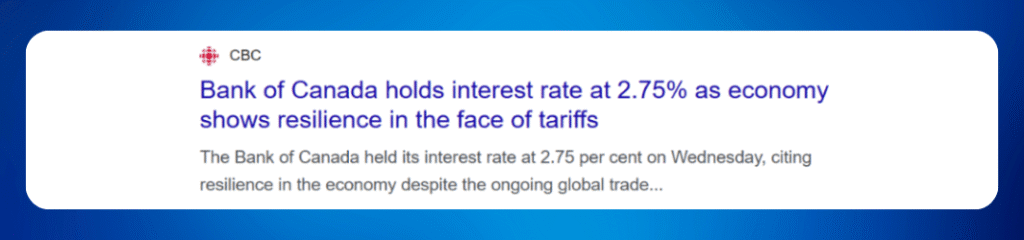
The Bank of Canada did hint that future cuts are possible this year, but only under certain conditions.
👉 The economy needs to slow down more
👉 Inflation must stay under control (even with trade issues)
Porter explained that the BoC is being cautious. Even though markets are betting on one more cut, the Bank wants to see lower inflation before making a move.
⚠️ How Trade Tensions Are Playing a Role
Trump recently increased tariffs on certain Canadian goods to 35%, up from 25%. While much of the cross-border trade remains protected by CUSMA, the move raised concerns that relations could worsen.
This new wave of tariffs is expected to slow growth rather than spike inflation. Porter said that unless Canada retaliates, inflation could stay manageable. But ongoing trade uncertainty could weigh heavily on the economy and may push the Bank of Canada to eventually ease rates to support growth.
If you’re a homeowner or planning to buy, here’s the big takeaway:
✅ Fixed rates might inch lower
⏳ Rate cuts will take time and depend on inflation
📉 Economic uncertainty is making the case for easing, but the Bank is moving carefully
We’re not expecting a big drop in rates just yet, but the path is slowly opening up for more movement later this year.
💬 Have questions about how these market changes could impact your mortgage?
At Garland Mortgage, we’re here to help you navigate every step, whether you’re renewing, refinancing, or buying your first home.
📲 Reach out anytime for personalized advice that fits your goals.
