
As Canadians ease into the new year, the Bank of Canada is gearing up for its first major move of 2025. December’s inflation data paints a complex picture for policymakers, with hopeful signs of relief but a few lingering challenges on the horizon.
Headline inflation: 1.8 / Average core inflation: 2.45%

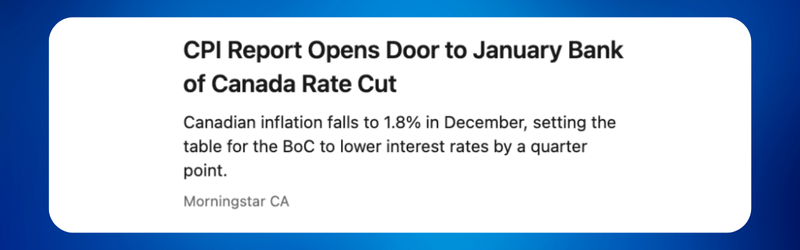
According to Statistics Canada, annual inflation slowed to 1.8% in December, down slightly from November. This marks a significant departure from the historic highs we saw just a couple of years ago. While this cooling trend is welcome news, it’s layered with temporary factors, like Ottawa’s GST/HST holiday, which began in mid-December.

The Impact of Temporary Tax Relief
The GST/HST holiday has been a holiday gift for many Canadians, offering relief on everyday essentials like groceries, restaurant meals, and even toys for the kids. But as much as this tax break has softened inflationary pressures, it’s temporary releif. Economists expect inflation to tick back up once this program ends, making it clear that any “cooling” effect is short-term.
For the Bank of Canada, this temporary dip in inflation is something they’re likely to “look through” as they assess the broader economic landscape. In simpler terms, they’re focusing on the underlying trends that shape inflation over the long term, not just the short-term price reductions we’re currently seeing.
What’s Next For Interest Rates?
After an aggressive cycle of interest rate hikes over the past two years, the Bank of Canada has taken a gentler approach lately. The central bank’s policy rate now sits at 3.25%, a level economists call “neutral.” This means borrowing costs are neither fueling inflation nor choking economic growth.
With inflation easing back toward the Bank’s 2% target, there’s growing optimism that another 0.25% rate cut could be on the horizon as early as next week. This would mark the sixth consecutive rate cut, a sign of growing confidence in the Canadian economy’s recovery.
However, it’s not all smooth sailing. Core inflation—stripping out temporary factors like the GST/HST holiday—has shown some signs of reaccelerating. While it’s too early to sound the alarm, this trend may prompt the Bank to slow the pace of rate cuts later in 2025.
While inflation data provides some clarity, uncertainty from our southern neighbour is muddying the waters. Renewed threats of U.S. tariffs could spell trouble for Canadian businesses and trade. President Donald Trump’s recent tariff warnings have already chilled business confidence, with many companies holding off on investments until there’s more certainty.
The Bank of Canada will undoubtedly factor these risks into its decision-making. The mere threat of trade disruption can dampen economic momentum, even if the tariffs don’t materialize.
On the bright side, Canadians are finally feeling some relief in housing costs. Mortgage interest costs have been declining for 16 consecutive months, thanks to lower interest rates. However, shelter inflation remains elevated, with rents rising 7.1% year-over-year in December. For homeowners, these rate cuts offer a much-needed breather after years of rising costs.
While challenges like trade tensions and fluctuating inflation remain, there’s a sense of cautious optimism as we enter 2025. The Bank of Canada’s approach to rate cuts has helped stabilize the economy, and further easing could provide even more opportunities for Canadian homeowners and buyers.
If you’re considering how these changes could impact your mortgage or financial goals, now is the time to explore your options. At Garland Mortgage Solutions, we’re here to guide you through every step of the process.
Let’s make 2025 a year of opportunity.
