
In a groundbreaking move that is set to redefine Canada’s housing market and borrowing landscape, the Office of the Superintendent of Financial Institutions (OSFI) has announced the implementation of a Loan-to-Income (LTI) limit. This policy is poised to transform the way Canadians approach home ownership and personal finance management. Globe and mail sources say the change is supposed to take effect “in the first quarter of next year” Here’s what you need to know…
Understanding The LTI Limit
The Loan-to-Income (LTI) ratio is a financial guideline that compares the amount of money a borrower takes as a loan to their annual income. Simply put, it’s a measure of your debt in relation to how much you earn. By introducing an LTI limit, OSFI aims to ensure that individuals do not take on mortgage debt that is disproportionate to their income level, a move that could mitigate the risk of financial vulnerability among Canadian households.
Why Now?
The decision comes in the wake of soaring house prices across Canada and the growing concern over household indebtedness. With the cost of housing outpacing income growth in many regions, the risk of over-leverage has become increasingly apparent. This policy is seen as a proactive measure to prevent a debt-fueled housing bubble and to maintain financial stability in the Canadian economy.
How Will It Affect You?
For prospective homebuyers, the LTI limit means that the amount they can borrow for a mortgage will be more closely tied to their income. This could have several implications:
- Buying Power: Your maximum borrowing capacity might decrease, affecting the price range of homes you can consider.
- Financial Health: On the positive side, the limit encourages financial prudence, ensuring that your mortgage payments remain manageable relative to your income.
- Market Impact: The policy could cool down overheated housing markets by limiting how much buyers can borrow, potentially slowing the rapid price escalation seen in recent years.
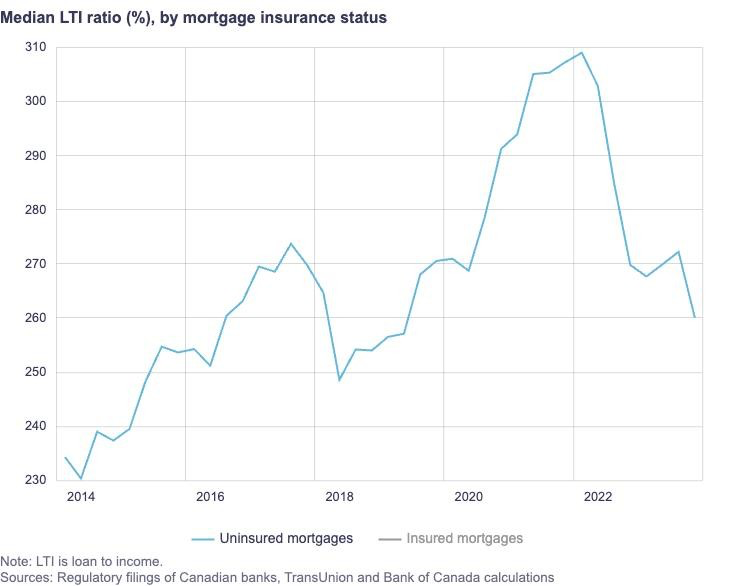
The introduction of the LTI limit by OSFI is a significant step towards promoting sustainable borrowing practices and ensuring the long-term health of Canada’s financial and housing markets. It reflects a shift towards more conservative lending and borrowing behaviors, aiming to protect individuals and the economy from the risks associated with excessive debt levels.
While it may adjust the trajectory for homebuyers and influence the market dynamics, it’s a move towards fostering a more stable and resilient economic environment. As Canadians navigate these changes, it will be crucial to plan and adapt financial strategies to align with the new regulatory landscape.
The OSFI’s implementation of a Loan-to-Income limit is a landmark policy aimed at ensuring financial stability and preventing over-indebtedness among Canadians. While it represents a shift in the housing market dynamics, it also offers an opportunity for Canadians to embrace more sustainable financial practices. As we adjust to these changes, the ultimate goal remains clear: to foster a stable, healthy economic environment for all Canadians.
